



First $406 Million Approved: Saudi Fund for Development Green-Lights 6 Projects in Syria — with a $1.5 Billion Pipeline on the Table
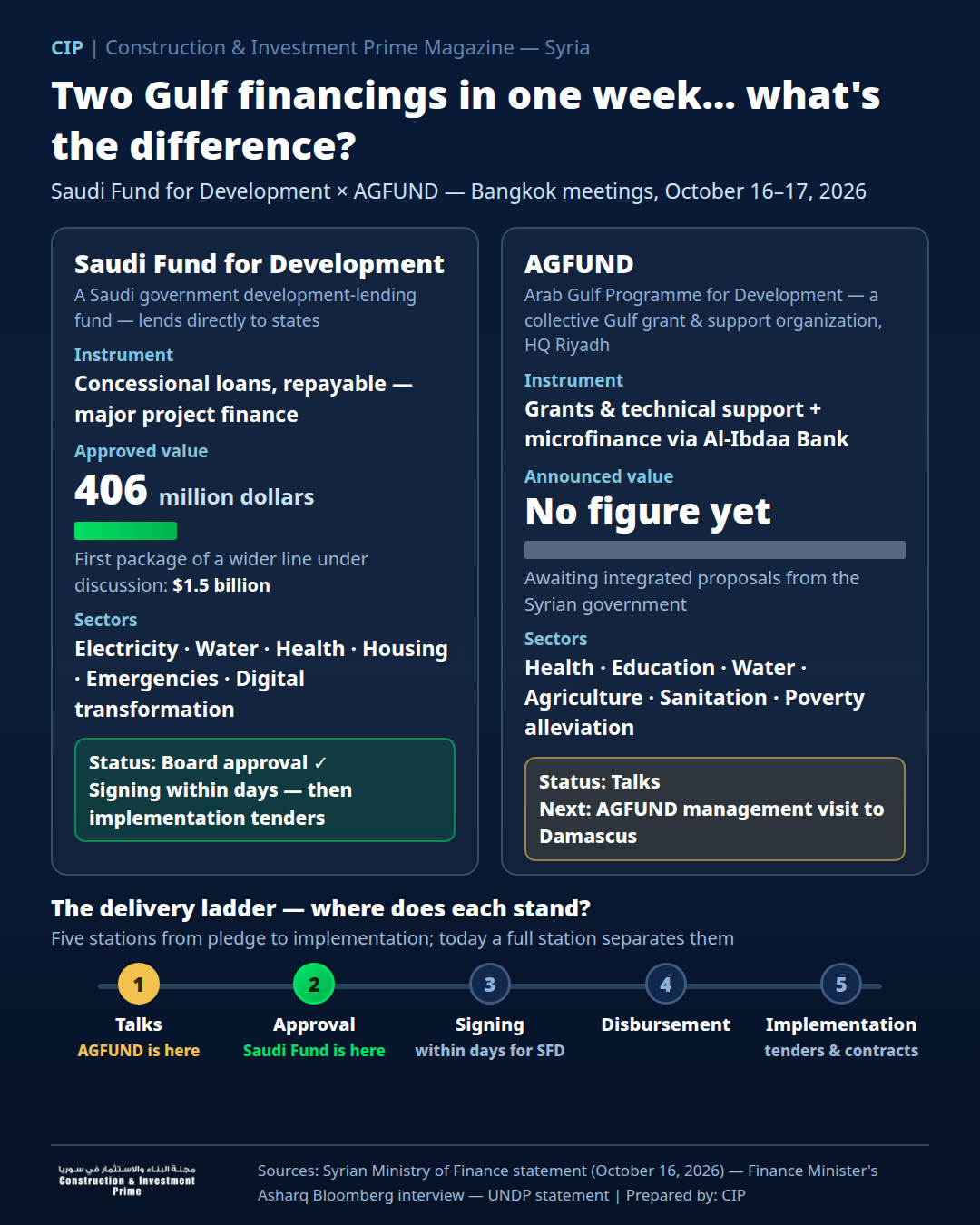
The Saudi Fund for Development board approves $406 million in concessional loans for six projects in Syria — the first package of a $1.5 billion financing line, signing within days. With a CIP infographic clarifying the difference between the Fund and AGFUND.
Bangkok — The Board of the Saudi Fund for Development has approved financing six projects in Syria with concessional loans worth $406 million, according to a Syrian Finance Ministry statement published on Friday, October 16, following a meeting between Finance Minister Mohammad Yusr Barnieh and the Fund’s CEO, Sultan Abdulrahman Al-Murshed, on the sidelines of the IMF and World Bank Group Annual Meetings in Bangkok.
The first package in numbers
Package value: $406 million
Number of projects: 6
Financing type: concessional loans
First-phase sectors: electricity, water, health, housing, emergencies, digital transformation
Status: Board approval — not yet signed
The bigger picture: $1.5 billion
The first package is part of a wider financing line under discussion between Damascus and Riyadh. In an interview with Asharq Bloomberg on the sidelines of the meetings, Barnieh said preliminary discussions with the Fund cover projects worth up to $1.5 billion in total, to be implemented in phases over the coming months, describing the loans as concessional and soft, and expecting the first package to be signed “within a few days.” The same figure had first surfaced when the Fund’s delegation visited Damascus and a phased project list — prepared with ministries and governorates under the “Syria Without Camps” workshop — was presented.
What else the talks covered
The two sides discussed preparing additional projects in health, education, housing, agriculture and livelihood improvement, aligning earlier projects with the “Syria Without Camps” initiative, and the Syrian delegation expressed openness to Saudi companies participating in implementing the financed projects. The same day, Barnieh met Saudi Finance Minister Mohammed Al-Jadaan, who affirmed support for accelerating completion of the studies of the projects proposed for financing, and for establishing a dedicated reconstruction trust fund.
What comes after signing?
Once the agreements are signed with the Syrian government, the package moves into effect, and implementation works are then tendered — the stage that matters to contractors and suppliers: electricity, water, health and housing projects across several governorates, with the door open to Saudi companies as partners or implementers. CIP follows this track step by step: the approval is done; signing is the next milestone.
For clarity: a fundamental difference between the two funds
In the same week, Damascus sat with two entirely different Gulf institutions: the Saudi Fund for Development is a government lending fund that finances states with concessional loans for major projects — and it has now reached the approval station with a confirmed figure. AGFUND, by contrast, is a collective grant and support programme working through grants and microfinance via Al-Ibdaa Bank — and it is still at the talks station, awaiting the government’s proposals. On the delivery ladder, a full station separates them, as the infographic shows:
CIP’s take
What makes this announcement different is that it moved beyond “talks”: a financing decision issued by the Fund’s board, with a specific figure and a near signing date. In the logic of the delivery tracker CIP follows, this is the step that separates a pledge from a project. The real test remains how fast signatures turn into implementation contracts on the ground — and we will be there to document it.
Prepared by: Construction & Investment Prime Magazine (CIP)
Sources: Syrian Ministry of Finance statement (October 16, 2026) via Al-Ikhbariya; Finance Minister Mohammad Yusr Barnieh’s interview with Asharq Bloomberg (Bangkok, October 2026); CIP files.
www.cip.sy | All rights reserved 2026