



From Concrete to Data: IREX ’26 Closes with AI and BIM at the Heart of Reconstruction
IREX '26 closed in Damascus with one message: the reconstruction projects ahead are designed with data and Building Information Modeling before they are built in concrete — closing sessions on smart cities, AI, real-estate financing, and architectural identity.
Damascus – CIP
The International Forum for Real Estate Development, Engineering and Construction Companies, “IREX ’26”, concluded its work in Damascus on Wednesday, 21 October 2026, after two days of sessions at the Seven Gates Hotel, under the patronage of the Ministry of Public Works and Housing and in partnership with the Arab Union for Real Estate Development, with the participation of more than 200 local, Arab and international companies from 11 countries.
The closing day carried one message from every session: the reconstruction projects ahead are designed with data and information models before they are built in concrete.
The city of the future starts at design
In the session “Real Estate Technology – City of the Future”, DSC’s Technology Sector Director Murid Al-Atassi affirmed that the shift toward smart cities has become an urgent necessity to improve citizens’ quality of life and cut future costs, through proactive maintenance and highly efficient resource management.
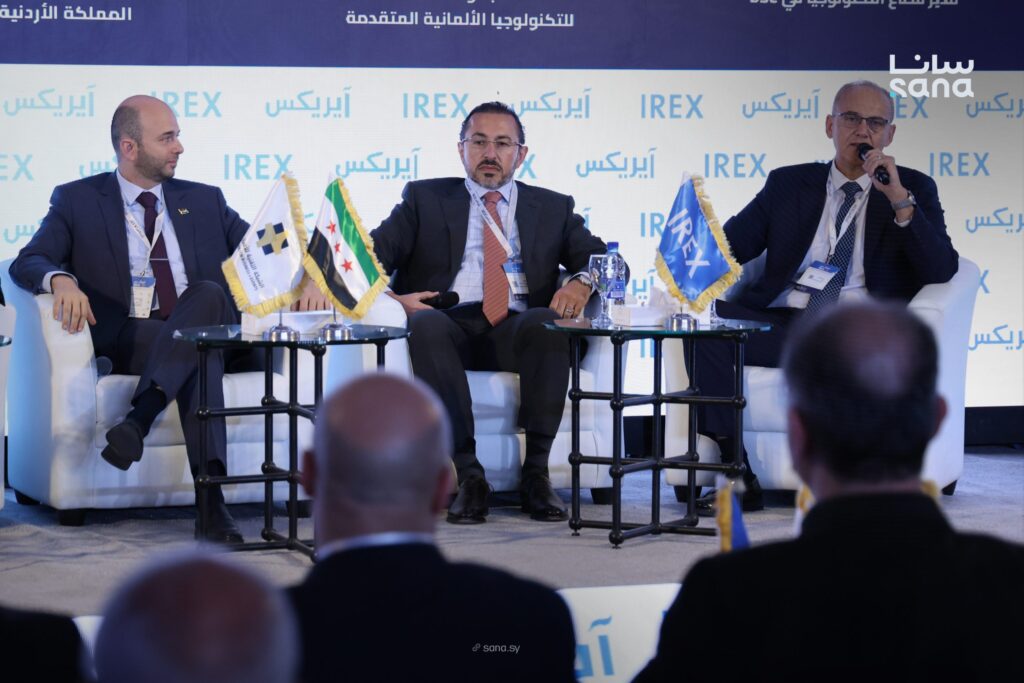
From the same session, Al-Awabed Deputy General Manager Saher Hilal stressed that Building Information Modeling (BIM) must be applied from the very first design steps, and that the success of smart cities and buildings is measured not by appearance at handover, but by the most efficient operation and by lower operating costs and energy consumption over the long term.
Jordanian architect Ahmad Siam, founding partner of Siam Architects, explained that data-driven advance planning is the starting point, and that precisely identifying needs — housing units and service facilities such as hospitals — is an essential step to ensure the success of reconstruction and smart-city projects.
The panel sessions also discussed employing artificial intelligence and digital transformation to raise the efficiency of infrastructure and asset management, the role of real-estate data in market analysis, pricing and demand forecasting, and strengthening transparency and investor confidence.
The state as organizer and supervisor
Deputy Minister of Public Works and Housing for Technical Affairs Maher Khlouf affirmed that the state plays the role of organizer and supervisor to ensure quality project execution and full compliance with approved plans and technical specifications, stressing that integration between the ministry, professional syndicates and contracting companies is the fundamental pillar for developing the building and construction sector.
Khlouf explained that the scale of destruction and the huge urban need requires completing projects in record times without compromising safety and quality, alongside qualifying cadres and expanding the use of technology and modern construction tools.
Financing… the missing element
In a session titled “Real Estate Financing – The Missing Element in Syria’s Real Estate Industry”, the Director General of the Real Estate Finance Supervisory Authority, Intisar Yassin, explained that specialized real-estate financing in the previous phase was limited to some banks, and that the Authority is working to update its laws and develop guarantee and refinancing tools, to secure long-term loans for individuals and development companies in line with market requirements in the coming phase.
Identity without imitation… and less energy
On the heritage axis, ACE Engineering Consultants partner and CEO and international cultural-heritage expert Luna Rajab affirmed the importance of balancing authenticity and modernity in safeguarding historic cities, through sustainable development management that employs technology and renewable-energy techniques without compromising the heritage value of these buildings.
The President of the Syrian Architects Association, Mohammad Assaf, held that architectural identity is not achieved by imitating heritage forms, but by employing its functional concepts through modern techniques and materials — cutting buildings’ energy consumption to around 50 percent.
What does this mean for engineering companies?
The IREX ’26 closing draws a new standard taking shape in the market: BIM proficiency and working with the digital model from the design stage are no longer an added advantage; they are gradually becoming a competitive condition for entering major reconstruction projects, from planning and quality to asset management after handover.
The opportunity is now open to companies that build their digital teams early: qualifying cadres on modeling and analysis tools is the next step the closing sessions agreed on, ahead of the forum’s next edition in August 2027.
Prepared by: Construction & Investment Prime magazine in Syria (CIP)
www.cip.sy | All rights reserved 2026