



SANKO Group and Çimko in Syria: A Cement Plant in Aleppo
SANKO Group does not enter Syria with a project inside a broad alliance, but with an industrial project under its own name: an integrated cement plant in Aleppo, restarting an existing plant and building a new line beside it, so cement is produced where it is built, not where it is imported from.
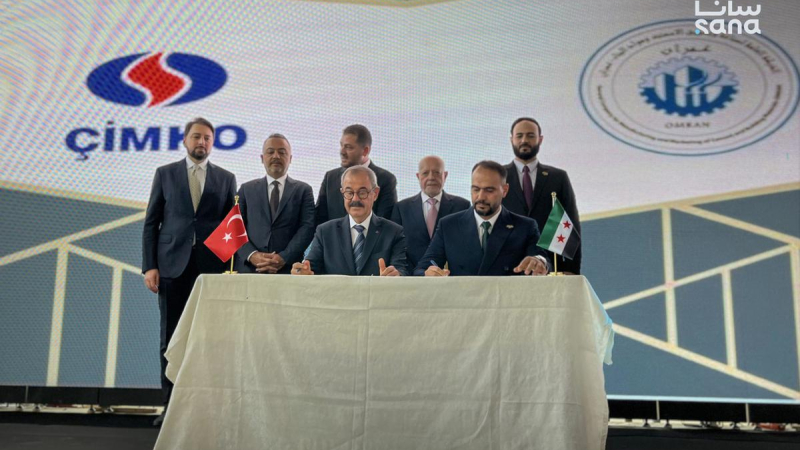
On 1 October 2026, the foundation stone was laid in Al-Muslimiyah, in the industrial zone north of Aleppo, for a project that restarts an existing cement plant and builds a new production line beside it. The project, in its full name: an integrated cement plant, with an investment of about 200 million dollars, carried out by the Turkish company Çimko with the Syrian Company for Cement and Building Materials Production and Marketing (OMRAN).
Who are SANKO Group and Çimko?
| Item | Information |
|---|---|
| Founded | 1904, from weaving looms in Gaziantep; SANKO Holding was formed in 1996 |
| Headquarters | Gaziantep, Turkey |
| Sectors | 11 sectors, most notably textiles, cement, renewable energy, packaging and agricultural machinery |
| Size | About 14,000 employees |
| Chairman of the Board | Adil Sani Konukoğlu |
| Çimko | The group’s cement and ready-mix concrete arm |
Çimko’s technical record
| Item | Information |
|---|---|
| Integrated plants | Three integrated cement plants in Narlı (Kahramanmaraş), Adıyaman and Bartın, plus a grinding plant and two packaging terminals |
| Annual capacity | 9.4 million tons of cement and 5.6 million tons of clinker |
| Standing | Ranked 148th in the Fortune 500 Turkey list, and fourth in its sector |
| Expertise | Cement and ready-mix concrete production, with ready-mix plants in southern Turkey |
This record is the direct link between the company’s past and its project in Aleppo: a cement company that builds and operates cement plants, not a company entering a new sector.
The Aleppo project — what was actually announced
Çimko signed a protocol with OMRAN on 1 October 2026, at a signing ceremony in Aleppo, signed by SANKO Holding and Çimko Chairman of the Board Adil Sani Konukoğlu and OMRAN General Manager Mahmoud Fadile, in the presence of Minister of Economy and Industry Mohammad Nidal al-Shaar, Turkish Ambassador to Damascus Nuh Yılmaz, Aleppo Investment Authority branch head Hazim Lutfi and Aleppo Governor Azzam El-Garib. On the same day, the foundation stone was laid for the rehabilitation and operation of the Al-Muslimiyah cement plant.
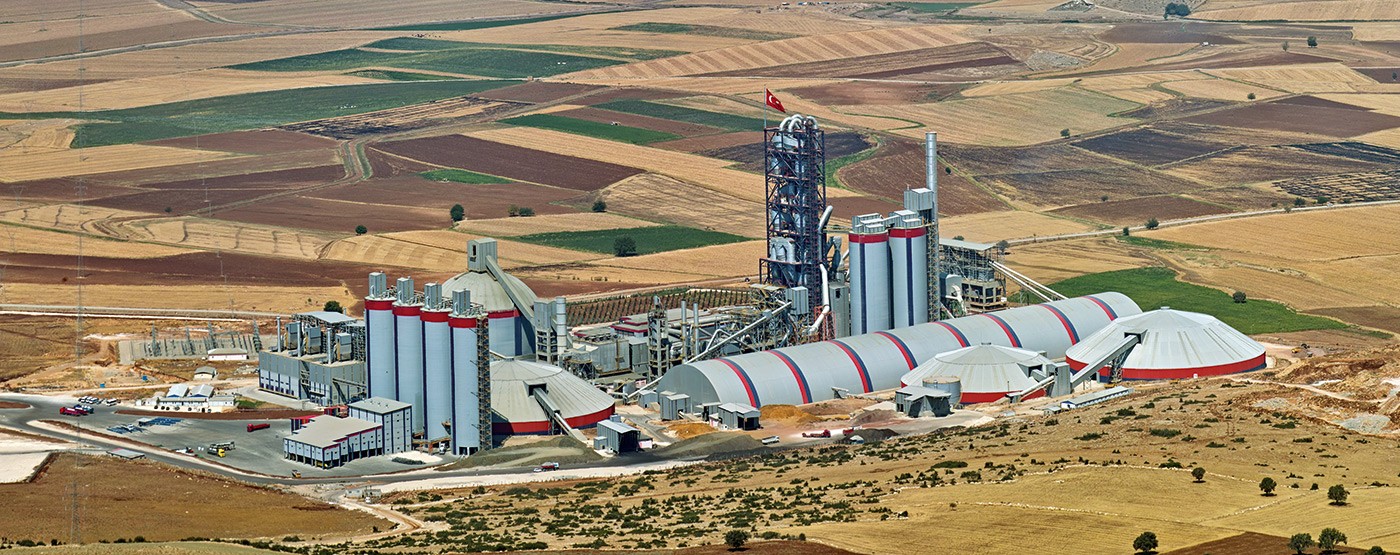
The project has two phases: first, building and operating a new integrated production line with a capacity of 5,000 tons of clinker per day, to be completed and operated within 12 months of the site handover, then rehabilitating the existing plant and connecting it to the new line under the approved timetable. The existing plant was damaged during the past years, so the project is a restart, not construction on empty land.
Figures of the Al-Muslimiyah cement plant project
| Item | Figure |
|---|---|
| Investment value | About 200 million dollars |
| Model and duration | Build, operate and transfer (BOT) for 30 years |
| Location | Al-Muslimiyah, the industrial zone north of Aleppo, near the raw material quarries and main transport corridors |
| New line | 5,000 tons of clinker per day, completed within 12 months of site handover |
| Full capacity | 1.5 million tons of clinker and 2 million tons of cement per year |
| Direct employment | About 200 people, with training for Syrian technical staff |
| Priority | Meeting the Syrian market’s needs first, then exports |
Why does a plant in Aleppo matter?
Because cement is the first material of reconstruction, and Syria imports most of what it needs. In 2025, Syria’s cement consumption was about 8 million tons, against domestic production of about 3 million tons. A plant in Aleppo, near the quarries and near the reconstruction market itself, means local production instead of imports, jobs and training for Syrian staff, and building material closer to the work sites.
What distinguishes this episode from the previous two?
The Kalyon and Cengiz projects are projects within two alliances led by Qatar’s UCC. Çimko’s project, by contrast, is independent under its own name: a bilateral agreement between a Turkish company and a Syrian public company, with no broad alliance. SANKO’s entry into Syria is not a contractor entering an infrastructure project, but an industrial entry producing in Syria for the Syrian market.
Work proceeds per the announced schedule: production starts about a year after the site handover, and the remaining phases of developing the production lines are completed in the following years.
Prepared by: Construction and Investment Prime Magazine in Syria (CIP)
Read next: Cengiz Company in Syria: Joint Work with Kalyon under UCC Leadership