



Yalbugha Returns to Life in the Heart of Damascus
A four-star hotel, a revolving restaurant, a helipad, a library, shops and parking for more than 800 cars — the Ministry of Awqaf announces the start of cladding and finishing works to revive the Yalbugha complex in Damascus, after five decades of delay.
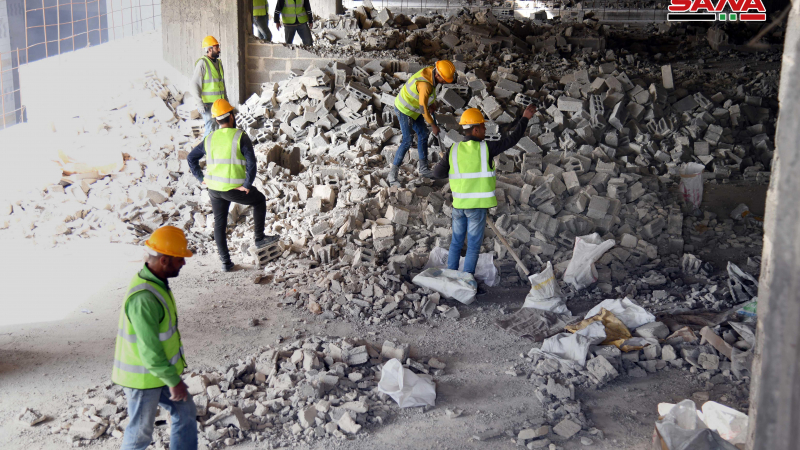
The Ministry of Awqaf has announced the start of cladding and finishing works at the Yalbugha complex in central Damascus, to revive one of the capital’s oldest stalled projects and turn it into an economic, tourist and cultural destination.
The project is led by the Damascus Awqaf Directorate, and includes a four-star hotel, a revolving restaurant, a helipad, a library, shops and parking for more than 800 cars, restoring the complex’s role in the heart of the city.
The complex’s story goes back to the 1970s, when the Mamluk-era Yalbugha Mosque, built in 1347, was demolished to make way for a huge religious, cultural and commercial complex, and work on it began in 1976. The Military Housing Establishment carried out the construction, but engineering problems, above all groundwater, halted work repeatedly, and the structural shell was only completed in 2004, after three decades of intermittent work, without ever entering service.
The building consists of two blocks, the first of 12 floors and the second of 6, with a total floor area of 73,000 square metres. Attempts to invest in the complex then followed without success, until its contract was awarded in 2018 to the Niqta Taqatu company, and rehabilitation works began in 2019, before the project stalled again and the structure remained out of service.
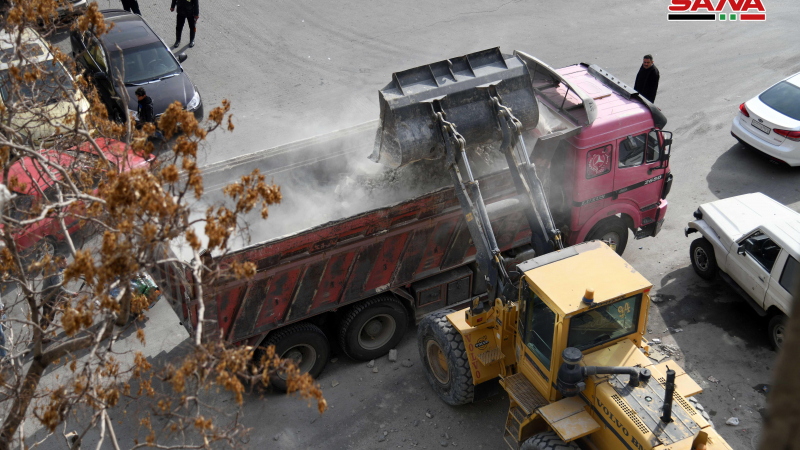
In February 2025, the Ministry of Awqaf terminated the investment contract with the company, confiscated the guarantees, claimed compensation, and recovered the site. Since then, parts of the complex have already entered service: the Interior Ministry opened the Immigration and Passports centre and the Civil Affairs centre there in September 2025, while the Awqaf announced a competition to choose the best exterior design for the complex.
With the start of the cladding and finishing works, the Yalbugha file returns to the fore as a project under implementation rather than an abandoned structure, and the date its facilities enter service remains dependent on the completion of the cladding and finishing stages.
Prepared by: CIP team
Read next: Omran restarts idle cement plants with $1.5 billion in investments