



Frankfurt: Syria’s Banking File on the Table of German Banks… No Agreement Yet
Four days of meetings in Frankfurt put Syria’s banking file on the table of German and European banks — without a single announced agreement.
This is a reading of what was put on the table, and what it means for anyone waiting to transfer money or finance their trade.
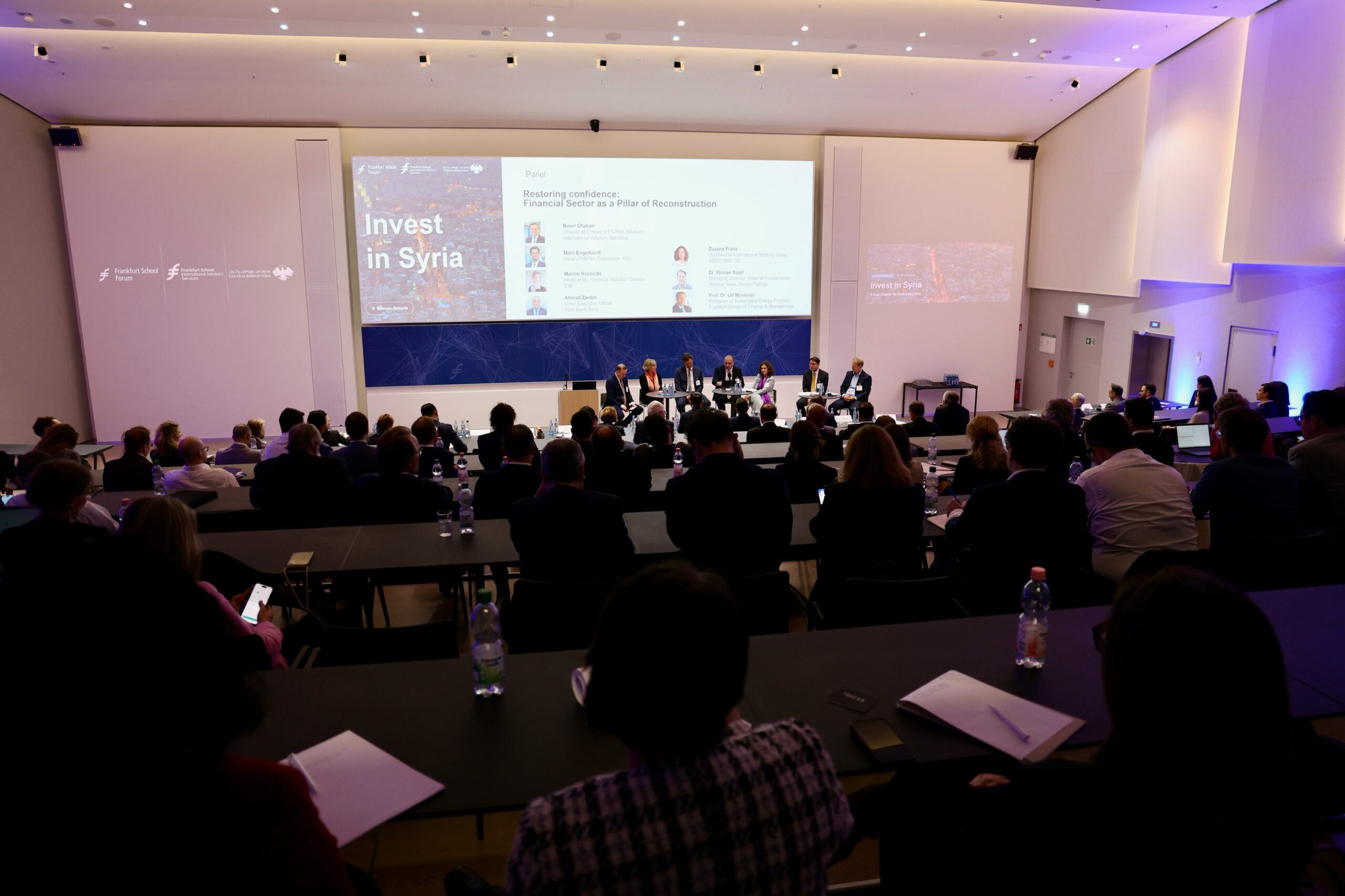
Frankfurt, 10 November 2026
Prepared by: Construction and Investment Prime (CIP)
Executive Summary
— The event: the “Invest in Syria” conference, Frankfurt, 10 November, invitation-only, led by a delegation headed by the Central Bank governor.
— The outcome: no agreement, no memorandum, no figure.
— What is pending: the German institutions’ reply to the compliance measures presented by the Central Bank.
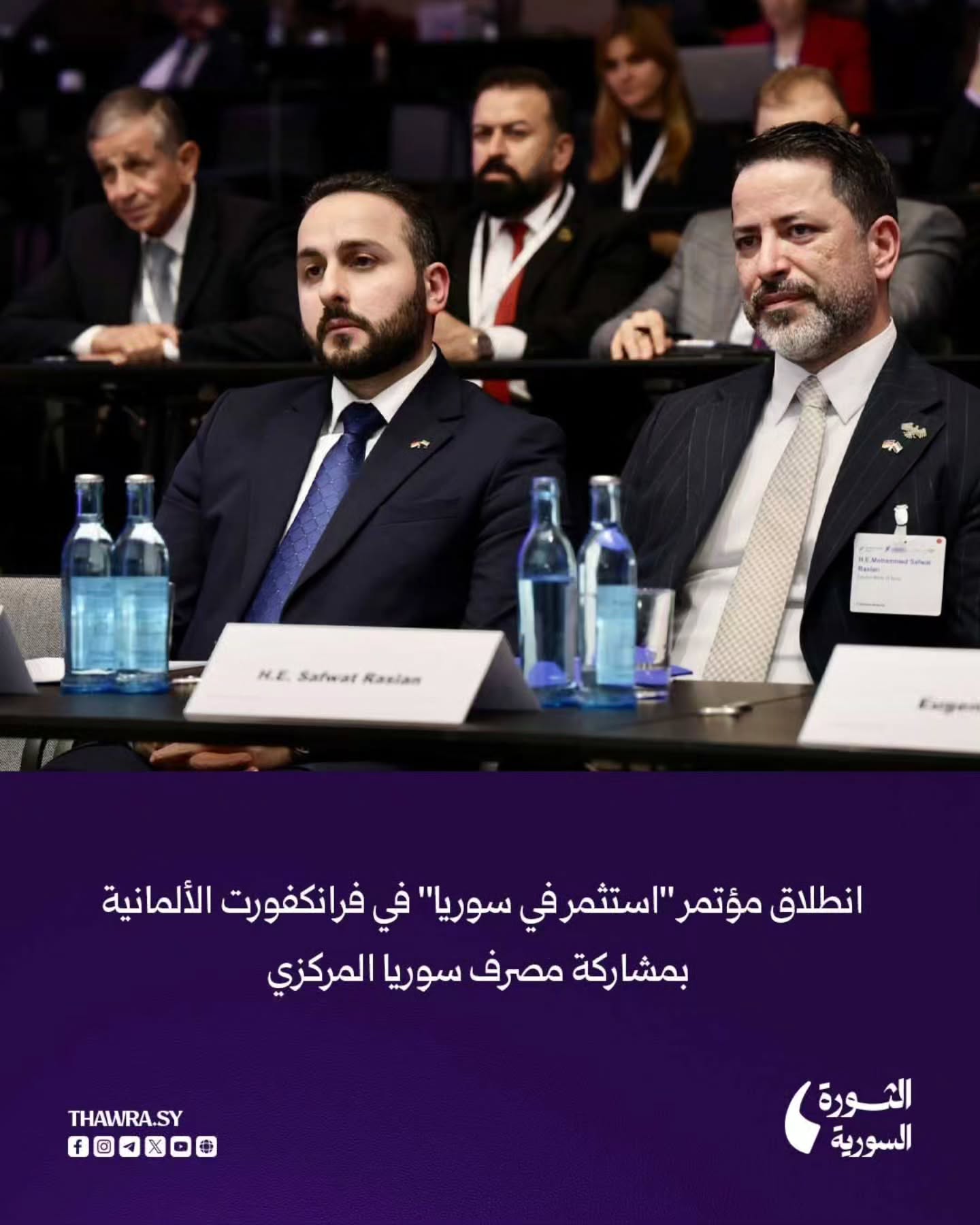
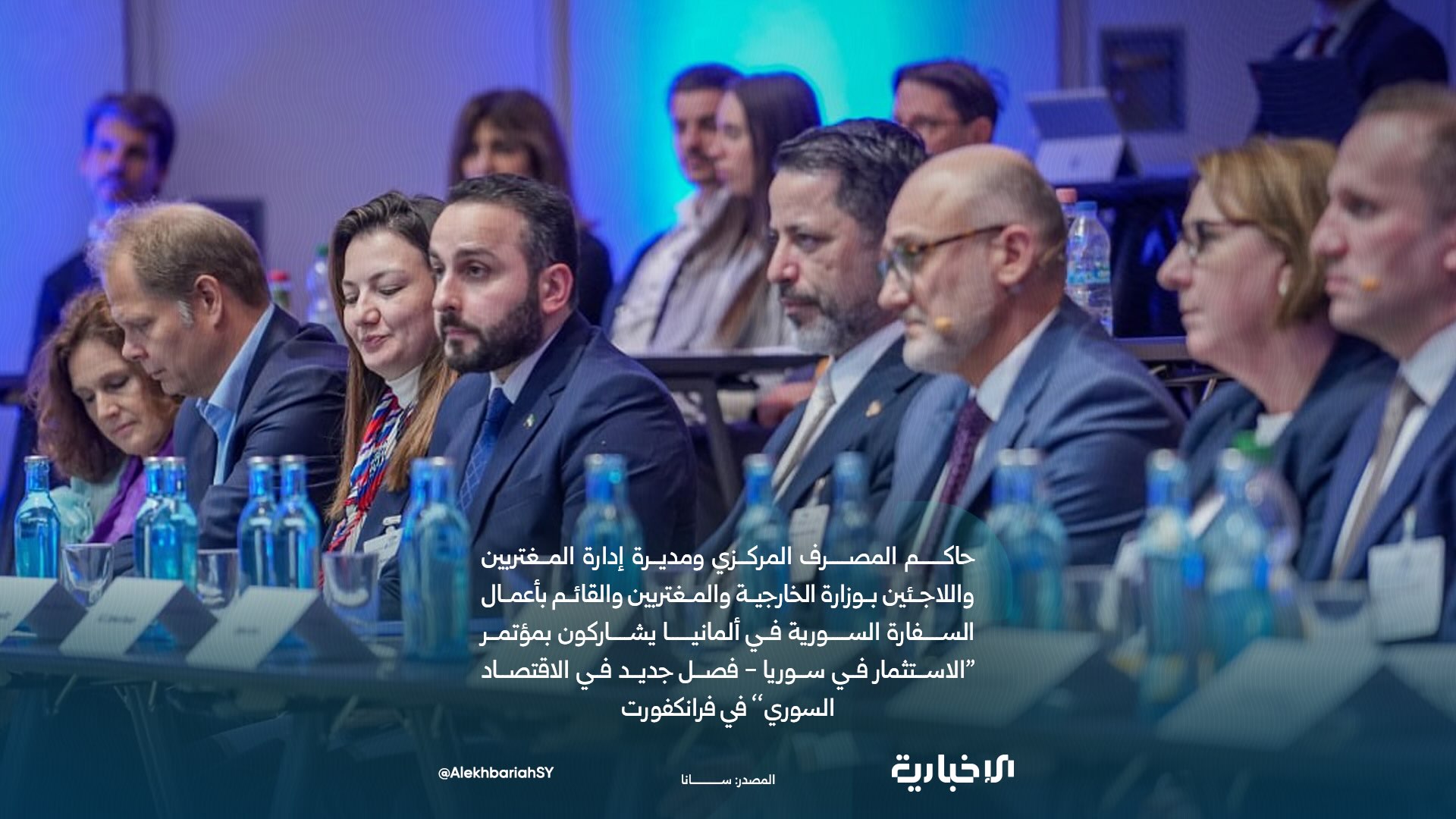
On Monday 10 November, the Frankfurt School of Finance & Management hosted the one-day, invitation-only conference “Invest in Syria: A New Chapter in the Syrian Economy”, led by a Syrian delegation headed by Central Bank of Syria Governor Mohammed Safwat Raslan, with representatives of Syrian, German and European financial, banking and regulatory institutions, alongside international and national development banks.
The conference was the main event of a Syrian delegation’s working visit to Frankfurt from 8 to 11 November, which included bilateral meetings and a meeting with members of the Syrian community in Germany, discussing consular services, financial dealings and transfers to Syria.
The conference sessions revolved around four issues: restoring confidence in the financial sector, participation and investment pathways, building partnerships for Syria’s recovery, and investing in people and strengthening institutions.
Speakers included representatives of the German Federal Ministry for Economic Cooperation and Development, the Frankfurt School, the German development bank, the European Investment Bank, and Arab and European banks.
In his keynote address, Governor Raslan set out the priorities of the financial transition: modernising banking and payment systems, restoring cross-border financial relations, encouraging investment and private-sector development, and gradually reconnecting Syrian banks to the international financial system.
His core message was that building the new Syria means building a stronger financial system that people and businesses trust and that is connected to the world.
No agreement announced — and talks continue
Despite all this, no agreement, memorandum or figure was announced from the Frankfurt conference.
Ongoing talks with German financial institutions aim to reactivate the Central Bank’s accounts and resume banking relations between Syrian and European banks, and the governor said he expects results soon.
According to what has been published about the talks, the outcome depends on foreign institutions accepting the compliance measures presented by the Syrian side.
The Frankfurt School — a partner of the Central Bank in a three-year, German-funded training agreement — said only that the conference laid the foundation for long-term institutional partnerships and concrete follow-up initiatives, without details or announced dates.
In other words, the news from Frankfurt is the start of the path, not its result.
What we know and what we don’t know
| Known | Unknown |
|---|---|
| The Central Bank, the German development bank and the European Investment Bank attended | The names of the commercial banks present |
| The Central Bank presented compliance measures | The content of these measures and the reply deadline |
| No correspondent accounts active yet | Which European bank will open first |
What does this mean for a businessman?
The practical meaning is direct: transfers to Syria and trade finance still pass through alternative channels, because direct banking channels with Europe have not yet opened.
Frankfurt did not open them, but it put the file on the official table: the Central Bank presenting compliance measures, and the German banks studying them.
What CIP is watching in the coming weeks is whether German institutions accept the compliance measures presented.
And it is also watching the activation of the first correspondent accounts between a Syrian bank and a European bank.
These two indicators alone will determine when talks turn into actual transfers.
What does it mean for whom?
For the importer and contractor: expect no direct transfer from Europe in the coming weeks, and keep your current payment arrangements.
For the European supplier: prepayment or an intermediary remains the norm.
For the German and European investor: the indicator worth watching is the first correspondent account, not the number of meetings.
The road to Frankfurt: three stations
The conference did not come out of nowhere.
On 3 September 2026, the Central Bank signed a cooperation agreement with the Frankfurt School and the German development bank, under which the School provides training programmes and specialised expertise to Central Bank staff and banking-sector employees over three years, with German funding, following a memorandum of understanding in October 2025.
On 1 and 2 November, the Central Bank’s Training and Qualification Centre was relaunched after a two-year halt, as a specialised academy and regional centre, covering risk management, banking supervision and anti-money-laundering and counter-terrorist-financing.
On 26 October, the governor received representatives of Commerzbank in Damascus and discussed with them the obstacles to trade and investment flows and the absence of stable banking channels, without a final agreement on opening correspondent accounts or starting direct transfers.
Days before Frankfurt, the governor took part on 30 October in the Financial Action Task Force plenary in Paris after an absence of more than 15 years, and the next day held a working meeting in Paris with French and Arab banks to restore banking relations, expand the correspondent network and facilitate trade finance — without signing agreements or announcing figures.
What next?
The real test is not in Frankfurt’s halls but in the replies that reach Damascus in the coming weeks.
If German institutions accept the compliance measures, talk begins about correspondent accounts and direct transfers.
If the reply is delayed, the file stays within meetings and training.
We are waiting for a public reply within 30 days; if none is issued, we will consider the file stalled and write that.
Summary box
The conference: “Invest in Syria” — a new chapter in the Syrian economy.
Date and place: 10 November 2026 — Frankfurt School of Finance & Management (within the 8–11 November visit).
The Syrian delegation: Central Bank Governor Mohammed Safwat Raslan, Expatriates and Refugees Department Director Nahla Othman, and Charge d’Affaires in Berlin Mohammed Barra Shukri.
The outcome: no agreement announced — talks continue to reactivate banking accounts with Europe.
What to watch: German banks’ acceptance of the compliance measures, and the first correspondent accounts.
Prepared by: Construction and Investment Prime (CIP) — All rights reserved
Read next: Austrian Interest in Railways and Vocational Training After the Vienna Forum