



204,000 TEU by Year-End: DP World Accelerates Tartus Port Development
DP World targets 204,000 TEU at the Port of Tartus by the end of 2026, after completing delivery of three mobile harbour cranes that lift handling capacity by about 40%, under a 30-year, $800 million concession.
A new investor document from the UAE group places Tartus among its priority growth terminals for 2026, after the completed delivery of three mobile harbour cranes lifted handling capacity by about 40%, under a 30-year concession and an $800 million investment.
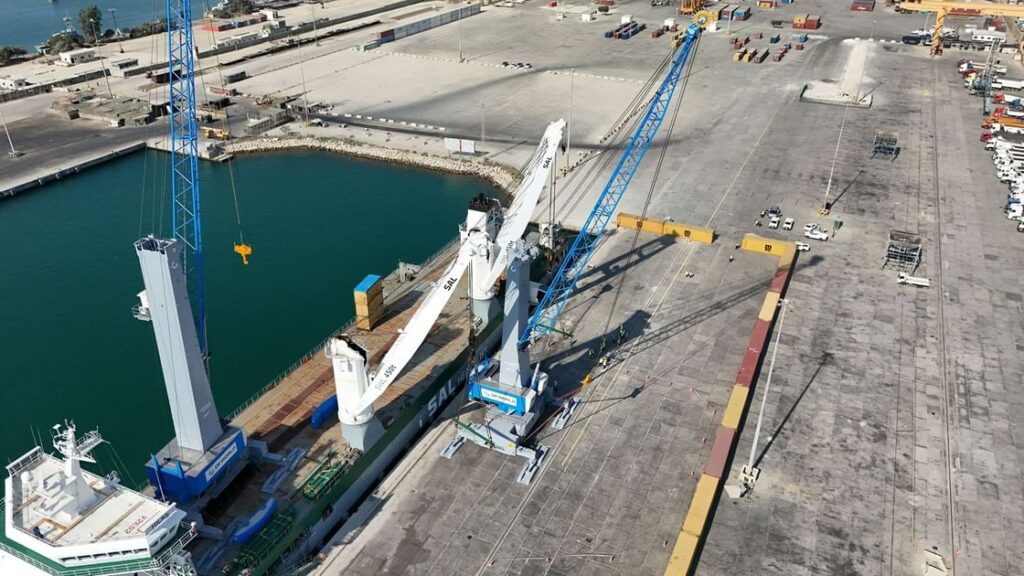
The development of the Port of Tartus is no longer a plan on paper. According to an investor document issued by DP World this October, the group is targeting raising the port’s capacity to 204,000 TEU by the end of this year, placing Tartus on its 2026 priority list for capacity growth alongside Jeddah in Saudi Arabia, Santos in Brazil and Evyap in Türkiye.
In practical terms, Syria’s second-largest port on the Mediterranean has entered its acceleration phase: equipment has arrived and is operating, a container target has been announced for the coming few months, and a phased programme runs through 2028.
Cranes Delivered, Capacity Up by About 40%
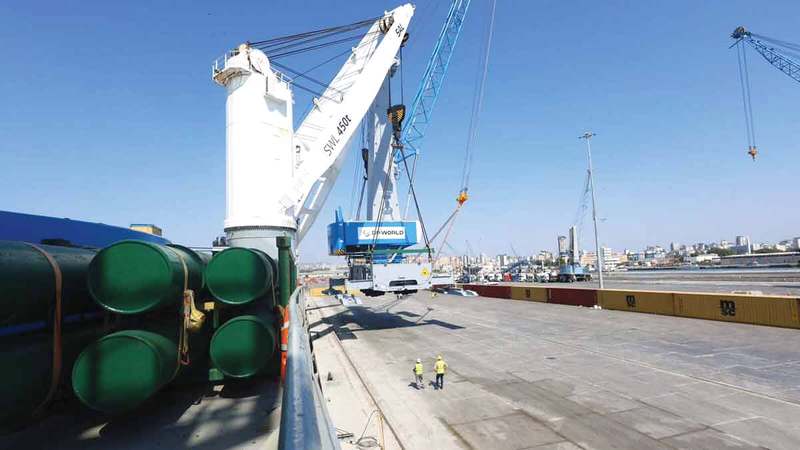
Last August, DP World completed a first major phase of its investment programme by taking delivery of three mobile harbour cranes. The first arrived on 29 June, followed by two more, each with a lifting capacity of 125 tonnes, on 11 August, completing the first phase of the port’s handling-equipment upgrade.
The company expects the three cranes to raise the port’s cargo-handling capacity by about 40%, speeding up vessel turnaround, cutting waiting times and expanding the port’s ability to handle containerised, bulk and general cargo.
Fahad Al Banna, Chief Executive Officer of DP World Tartous, said: “This milestone represents much more than the delivery of new equipment. It reflects our long-term commitment to supporting Syria’s economic recovery by rebuilding critical trade infrastructure. A modern port reduces the cost of doing business, attracts investment and creates skilled jobs.”
A Regional Gateway, Not a Local Port
DP World views Tartus as a regional logistics gateway, not a Syrian terminal alone. Mohammad Shihab, Executive Vice President for Egypt and the Levant, described the port as having the potential to become “a vital trade and logistics gateway, connecting Syria with key regional markets including Iraq, Jordan, Lebanon and Türkiye”, noting that the investment aims to increase efficiency, reduce supply chain bottlenecks and give businesses more reliable access to regional and global markets.
Actual traffic figures support this direction: between January and August this year, the Port of Tartus received 551 vessels and handled around 5 million tonnes of cargo, in an indicator of steadily growing maritime activity on its quays.
What Comes Next?
The plan does not stop at the three cranes. The next phase of the modernisation programme, according to the company, includes:
– Additional cargo-handling equipment, including forklift trucks and reach stackers, before the end of this year
– Nine additional light-duty mobile harbour cranes during 2027 and early 2028
– A new quay crane planned for 2028
– Dredging to deepen the harbour for larger vessels, and refurbishment of the quay walls, to be completed by the end of 2027
– Digital operating systems and programmes to develop the skills of the local workforce
From Agreement to Operations
The General Authority for Land and Sea Ports signed the concession agreement with DP World on 13 July 2025, for 30 years under a build-operate-transfer model, with an investment commitment of $800 million to develop infrastructure, upgrade handling equipment and digitise operations at the container and general cargo terminals. The agreement was signed by DP World Group Chairman and CEO Sultan Ahmed bin Sulayem and the Authority’s chairman Qutaiba Ahmad Badawi, in the presence of President Ahmad Al-Sharaa.
The group began operating the port in November 2025 following the official handover, and the port’s new tug, Al-Fath, entered service in the same month. The port had previously exited a Russian operating agreement signed in 2019 and cancelled in early 2025, opening a new chapter of world-class operations at Tartus.
The Programme in Numbers
– Investment value: $800 million
– Concession term: 30 years (from July 2025)
– Cranes delivered: 3 mobile harbour cranes
– Expected rise in handling capacity: 40%
– Target by end of 2026: 204,000 TEU
– Traffic, January-August 2026: 551 vessels and around 5 million tonnes of cargo
– Coming phases: 9 additional light-duty cranes (2027 – early 2028) and a quay crane (2028)
Sources: DP World statement (17 August 2026); Emarat Al Youm (16 October 2026); data of the General Authority for Land and Sea Ports and SANA.
Prepared by: Construction & Investment Prime (CIP)