



Emaar exhibition 2026 Closes with $1.756 Billion… But Execution Is the Real Test
Emaar exhibtion 2026 Closes with $1.756 Billion… But Execution Is the Real Test
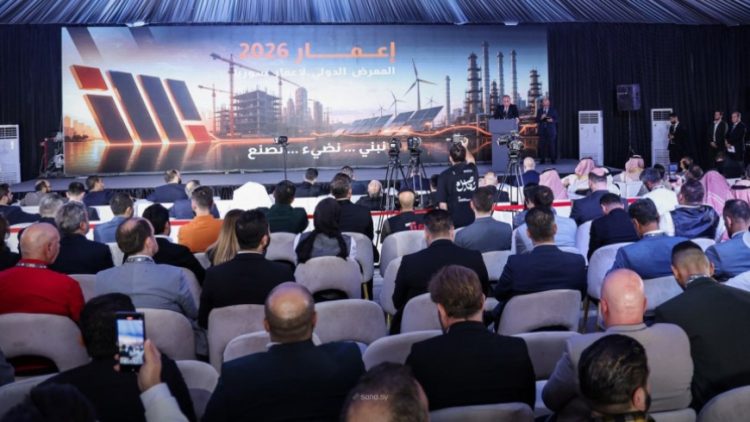
The second edition of the Syria International Reconstruction Exhibition, “Emaar 2026,” concluded in Damascus in mid-September 2026. Organized by Effect Plus over four days (13–16 September) at the fairgrounds, the event was sponsored by the ministries of Economy, Industry, Tourism, Local Administration and Environment, the Syrian Investment Authority, and the Federation of Syrian Chambers of Commerce. Announced results: 356 local, Arab, and international companies from 27 countries; 3,200 direct contracts worth more than $1.756 billion; and 412 memoranda of understanding.
The second edition of the Syria International Reconstruction Exhibition, “Emaar 2026,” concluded in Damascus in mid-September 2026. Organized by Effect Plus over four days (13–16 September) at the fairgrounds, the event was sponsored by the ministries of Economy, Industry, Tourism, Local Administration and Environment, the Syrian Investment Authority, and the Federation of Syrian Chambers of Commerce.
Announced results
356 local, Arab, and international companies from 27 countries, representing more than 1,700 commercial agencies — up 145% on the previous edition.
3,200 direct contracts worth a total of more than $1.756 billion.
412 memoranda of understanding between local, Arab, and international companies and institutions.
Sectors: construction, infrastructure, industry, and services, with the program focused on energy, industry, construction, and real estate development.
Headline deals
Saudi Arabia’s Al-Rawaf Contracting: a $300 million roads and infrastructure contract — the largest at the fair.
Al-Hassan Holding with Al Jouf Cement: $72 million in cement supply contracts — with organizers announcing it has entered the readiness phase for actual execution.
Advanced Technical Systems: a $15 million contract for a water treatment and pumping stations project.
Tharaa Real Estate Development: infrastructure supply, building materials, and finishing contracts for the delivery of the “Sham View” residential project in Damascus.
CIP analysis: five professional takeaways
First: distinguish a contract from a memorandum.
The $1.756 billion figure covers only the 3,200 direct contracts. The 412 MoUs cannot simply be added to it or treated as projects under execution. A memorandum is an intention; a contract is a commitment — and confusing the two is the first mistake in reading exhibition news.
Second: put the number in its true scale.
The World Bank has estimated the cost of rebuilding Syria’s damaged physical assets at around $216 billion. The fair’s outcome — significant as it is — represents less than 1% of that bill. That is not to diminish it, but to place it in context: exhibitions light the spark, but the financing gap needs far bigger instruments.
Third: the measure is movement to the field.
The most important sentence in the organizers’ statement is not the headline figure, but that the Al-Hassan Holding–Al Jouf Cement contract is ready for actual execution. A contract that moves from paper to site is the real hard currency — everything else is promises.
Fourth: read the composition of the deals, not just their total.
Roads, cement, water, and building materials: the market is now in a “materials and infrastructure” phase — the reconstruction engine is still in preparation mode, not yet in full-scale construction. That is a useful early signal: peak demand for major contracting has not arrived yet.
Fifth: exhibitions have changed their function.
From “Emaar 2026” to the Damascus International Fair (results exceeding $1 billion) to the upcoming Big 5 Construct Syria in December — Syrian exhibitions have shifted from showcases to signing platforms.
The message to companies is clear: attendance is no longer about public relations, but about securing contracts before they are decided.
Bottom line: $1.756 billion is a figure worth pausing at — provided it is read professionally: contracts, not memoranda; the start of a road, not its end; a phase indicator, not a certificate of completion.
The real test will come in a year’s time: how many of these 3,200 contracts were actually delivered on the ground?
Sources:
Syria News Gazette (via SANA)
Levant24
Dama Post
Al-Wahda News
Golan Media (analysis)
Editor’s note: Results were announced in mid-September 2026.
Prepared by: Construction & Investment Prime magazine (CIP) — www.cip.sy
All rights reserved 2026