



Damascus Draws Its Skyline: Clear Height Rules Bring Investor Certainty and Protect Heritage
Damascus is moving from project announcements to published height and visual-protection rules. What do the new skyline controls mean for investors and developers — and how is heritage itself becoming an asset class?
An open debate in the capital over towers and the city’s identity — but the most important message for investors is not in the debate itself, but in its direction: Damascus is moving from project announcements to published height and visual-protection rules, and clear rules are the first thing capital looks for before it moves.
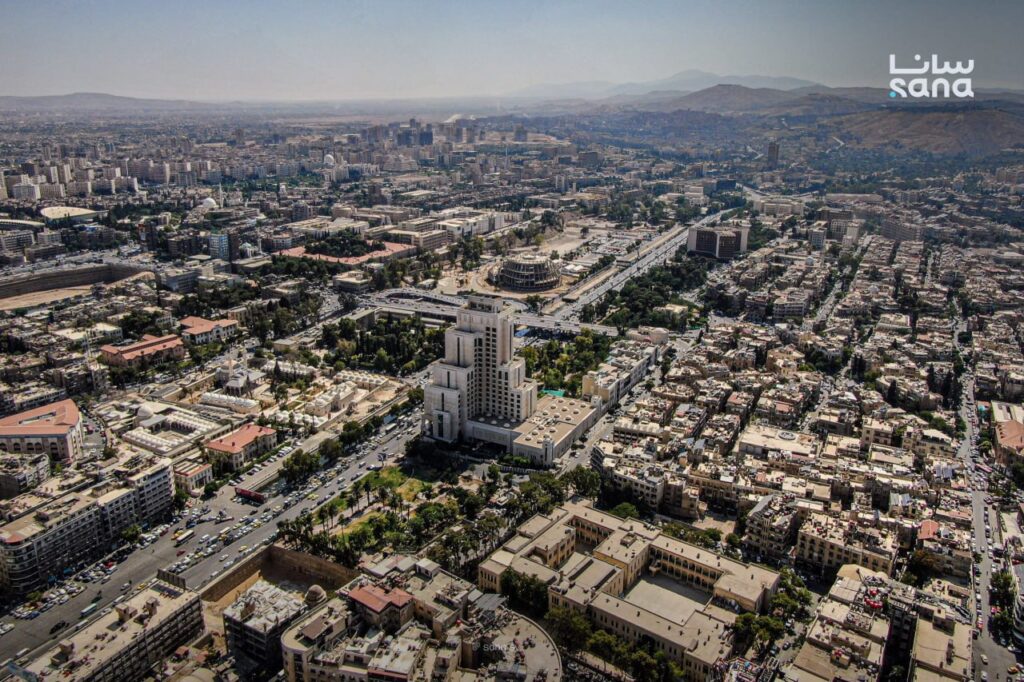
Damascus – CIP
Real estate investment has returned to the forefront in Damascus since the end of 2024, with a package of anticipated projects covering the city center, its expansions, and its nearby countryside. With this return came the parallel question: how can the oldest inhabited capital absorb modern buildings and towers without losing its historic fabric and identity?
The answer taking shape today comes not from investors’ statements, but from the regulating authority itself.
The Governorate’s Vision: Reconstruction as Reorganization, Not Building Replacement
Amjad Farkh, director of the Old Damascus Directorate, explains the governorate’s vision as follows: reconstruction is not, in its calculations, a process of replacing damaged buildings nor a race toward larger urban masses, but an opportunity to reorder the city’s growth itself, so that this growth advances without Damascus losing its historic character and urban features.
The city is divided in this vision into three categories: a first category of high heritage and urban sensitivity, whose priority is preservation, maintenance, and rehabilitation; a transitional category touching the historic city and its landmarks, requiring its own special controls; and a third category dedicated to modern urban development, absorbing higher densities and more modern building patterns.
Farkh adds that work is underway to link these categories to a comprehensive urban data system and a strategic plan that precisely maps the boundaries of protected areas, restoration sites, and spaces that can grow in density.
The context is not entirely new: Old Damascus has been a UNESCO World Heritage site since 1979, and the “green belt” (al-haram al-akhdar) in the two Ghoutas has been off-limits to construction since the 1936 Écochard plan. What is new is turning this regulatory legacy into published assessment tools for every new project.
Written Standards Before Licensing
Farkh stresses that the governorate does not decide its position on any proposed project within historic areas based on its area, number of floors, or economic feasibility alone. The decision comes after examining a broader file: the characteristics of the site itself, the historic value carried by the building or its surroundings, how the project will integrate into the surrounding urban fabric, its size, height, architectural mass and building materials, its impact on the visual scene, as well as its effect on traffic and infrastructure capacity, and the nature of the use it proposes.
He emphasizes that the forthcoming height studies will not be built on a single uniform figure, but will be tied to visual corridors and to measuring each building’s impact on the scene; a certain height may pass at one point in the city and be rejected at a second point not far from it.
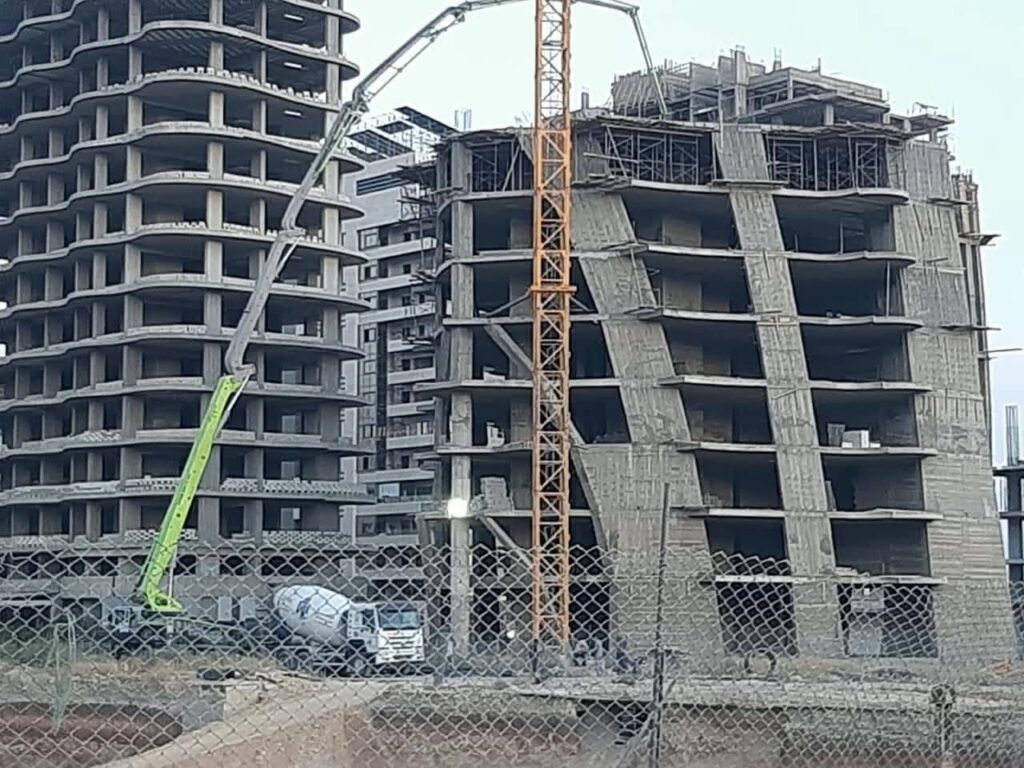
Towers Are Not Banned… They Are Conditional
Specialists do not present protection as a ban. Dr. Khaled Al-Ayoub, a doctor of architecture and urban planning engineering, puts his finger on another challenge facing any modern building controls: waves of land speculation. When land prices jump, the traditional building becomes a target for demolition or accumulated disfigurement, to be replaced by a hastily built commercial project chasing quick profit.
In contrast, towers can coexist with the historic city if directed toward pre-drawn expansion belts far from the old center, separated from it by spaces that respect views and the scene, if any towering structure is banned in the backdrop of major landmarks such as the Umayyad Mosque and Qassioun, and if modern building heights are subject to calculated ceilings that preserve the city’s historic skyline.
From his seat as regulator, Farkh meets this proposition: towers are neither a single recipe fit for every Damascus neighborhood, nor does protecting identity mean freezing vertical construction in the city altogether.
Existing Projects Enter the Test
The real test of these rules is being run on existing projects approved under special legislation. On “Marota City,” Al-Ayoub says the project planted isolated glass tower masses in the middle of the city, breaking the continuity of Damascus’s familiar horizon, with a striking contrast in density and in social and economic patterns between them and the adjacent residential neighborhoods. “Basilia City,” meanwhile, offers a chance to relieve pressure on the city with its wide grid plan, but threatens to isolate the rural Damascene identity of the southern neighborhoods. In the Qaboun industrial area and Jobar, workshops and the artisanal fabric are being replaced by towers at the city’s entrances, while the Baramkeh and Kafar Sousah projects raise questions of infrastructure, congestion, and visual competition with the Sulaymaniyah Takiyya, Damascus University, and Qassioun.
On the ground, the governorate is moving on the Marota and Basilia file with corrective tools: a package of measures to address residents’ grievances and compensate them, and a plan to build 54 residential towers for alternative housing within three years. In other words, the two projects at the top of the controversy are now being managed with published corrective files, not general promises.
CIP Analysis: What Does This Mean for Investors and Developers?
First, regulatory certainty is more precious than leniency. An investor who buys land already knowing the height ceiling and visual-impact requirements risks less than one who buys hoping for a later exception. Published rules, even strict ones, can be priced and managed; only regulatory surprises cannot be priced.
Second, the value map is being redrawn. The designated expansion axes and areas able to absorb density, with their carrying capacity of roads and infrastructure, become the prime address for major projects; in contrast, the cost of venturing near the historic fabric and visually sensitive areas rises.
Third, heritage is becoming an asset class in its own right. When the director of the Old Damascus Directorate himself affirms that investment in culture, tourism, and crafts, and putting historic buildings back to work instead of leaving them frozen, may give the city in the long term a higher value than conventional real estate construction, this is an official declaration opening the door to a different investment product: historic buildings returned to the economic cycle instead of being frozen or demolished. Farkh sums up the whole equation from his angle: Damascus’s identity is not necessarily a burden on investment; if protected, it can become one of the city’s economic assets and a card in its future competitiveness.
The constructive conclusion: the skyline debate in Damascus is not anti-investment noise, but a maturing market. Cities that write their rules before the major building wave protect their heritage and raise the value of their projects together — and whoever reads the rules early buys certainty before it has a price.
Prepared by: Construction & Investment in Syria Magazine (CIP)
www.cip.sy | All rights reserved 2026